Published
- 5 min read
Protecting Your Nectar from Summer Heat: Feeder Placement and Freshness
Protecting Your Nectar from Summer Heat: Feeder Placement and Freshness
When the summer sun beats down on your backyard, it creates a serious challenge for anyone hosting a nectar feeding station. Baltimore and Bullock’s Orioles rely on sugar water and grape jelly for quick energy. However, sugar water suspended in a plastic or glass container under a 90°F sun acts exactly like a greenhouse.
Within a matter of hours, the intense heat accelerates the growth of naturally occurring yeast and bacteria. The clear nectar turns cloudy, and a dangerous chemical process begins: fermentation. Fermented nectar produces alcohol, which causes severe liver damage in small birds and can be fatal. If a bird tastes fermented nectar at your station, it will likely abandon your yard entirely.
As a backyard birding expert, I want to ensure your feeding station remains a safe oasis even during the brutal dog days of summer. In this guide, I will share the professional strategies for protecting your nectar from the heat, focusing on strategic feeder placement, specialized accessories, and strict freshness protocols.
1. The Strategy of Shade: Feeder Placement
The single most effective way to prevent your nectar from boiling in the sun is to rely on natural or artificial shade.
Natural Canopy Shade
Never hang a nectar feeder in the middle of a sun-baked lawn.
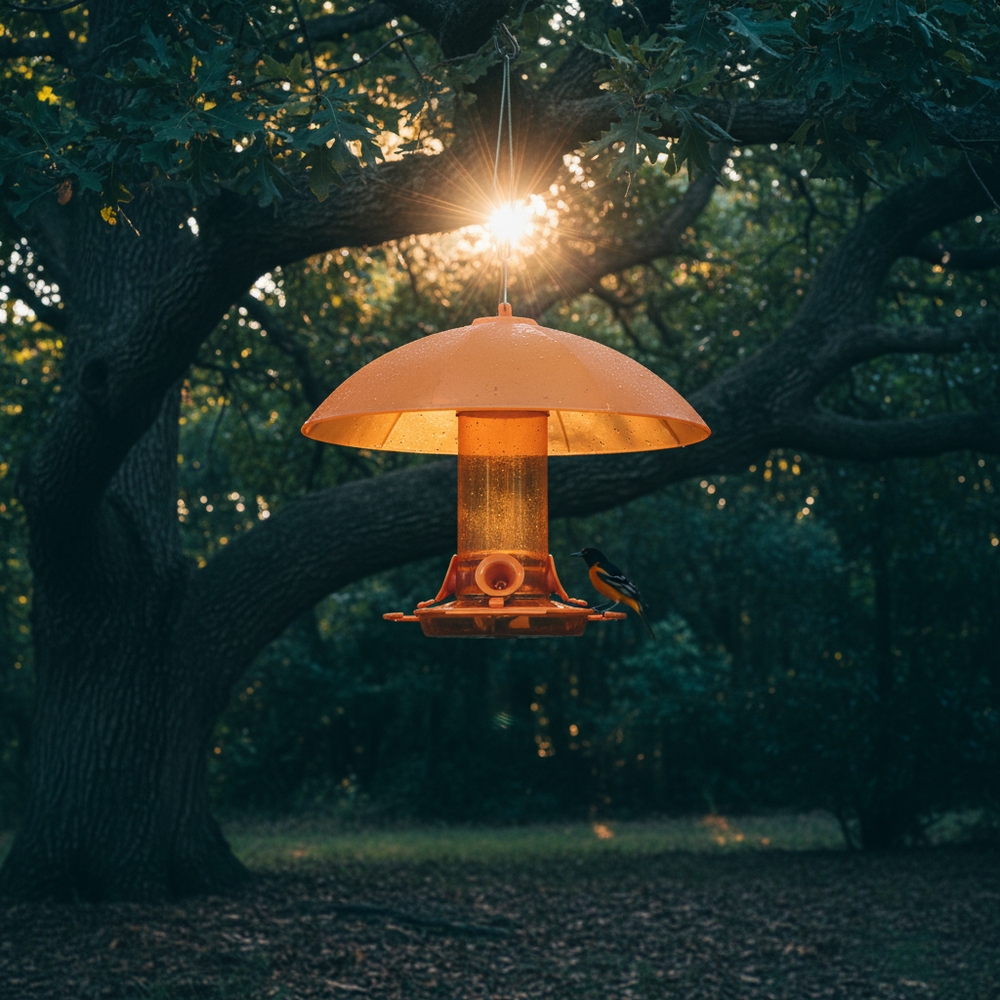
- The Best Location: Hang your feeder on the east or north side of a large, mature deciduous tree. This ensures the feeder might get some gentle morning light, but is completely protected by the tree’s shadow during the intense afternoon heat (12:00 PM to 4:00 PM).
- The Bonus: Orioles naturally prefer to feed near the safety of a high canopy anyway. By placing the feeder in the shade of a tree, you make them feel more secure from predators.
Artificial Shade (Weather Guards)
If your yard lacks mature trees, you must provide your own shade.
- The Solution: A specialized feeder weather guard. These are large, umbrella-like domes that hang on the pole directly above the feeder.
- Why it works: An opaque, brightly colored dome casts a permanent shadow over the nectar reservoir, dropping the temperature of the liquid by up to 15 degrees. As an added bonus, it keeps rain out of the feeding ports, preventing the nectar from becoming diluted.
- Affiliate Pick: Birds Choice Orange Weather Guard
2. Micro-Bathing: The “Less is More” Approach
Many beginners make the mistake of filling their massive 32-ounce nectar feeders to the brim in July, thinking it will save them time.
- The Problem: In 85°F+ heat, nectar spoils in 24 to 48 hours. If you fill a 32-ounce feeder for two Orioles, they will only drink 2 ounces before the rest of the liquid turns toxic. You end up pouring 30 ounces of spoiled sugar water down the drain.
- The Solution (Micro-Bathing): During a heatwave, only put out exactly what the birds will consume in a single day. Pour just one inch of nectar into the bottom of the feeder. Yes, you will have to refill it every morning, but this guarantees that the birds are getting fresh, safe fuel, and it prevents you from wasting sugar.
3. The Refrigerator Rotation Hack
If you are committed to keeping your birds fed during a 95°F heatwave, you need a backup plan.
- The Technique: Buy two identical, inexpensive Oriole nectar feeders.
- The Workflow: Keep one feeder in the refrigerator, filled with a small amount of cold nectar. Every morning, take the cold feeder outside and swap it with the hot, day-old feeder. Bring the old feeder inside, scrub it with your bottle brush, and put it in the fridge for tomorrow’s swap.
- Why it works: Cold nectar takes much longer to warm up and ferment outside. By rotating two feeders, you ensure a perfectly sterile, cool meal for your birds every single day without spending 10 minutes scrubbing a hot feeder in the yard.
4. Glass vs. Plastic in the Summer
Does the material of your feeder matter in the heat? Yes.
- Glass Feeders: Glass takes longer to heat up than thin plastic, providing a slight buffer against morning sun. More importantly, glass is completely non-porous. It will not absorb the microscopic mold spores that often embed themselves in scratched plastic reservoirs. Glass can also be sterilized with boiling water or run through a dishwasher.
- Plastic Feeders: While lighter and cheaper, cheap plastic will warp in the sun and degrade from UV exposure. If you use plastic, ensure it is high-quality, BPA-free, and UV-stabilized.
Conclusion
Summer heat doesn’t mean you have to stop feeding your beloved Orioles, but it does require a shift in your management strategy. By moving your feeders into the deep shade, utilizing protective weather domes, and adopting the daily “micro-batch” filling method, you can completely eliminate the risk of fermentation and black mold. Keep the nectar cool, keep the feeders clean, and your backyard will remain a safe, thriving bird sanctuary all summer long.