Published
- 5 min read
How to Clean an Oriole Feeder: Preventing Black Mold and Fermentation
How to Clean an Oriole Feeder: Preventing Black Mold and Fermentation
Attracting Orioles to your backyard is a thrilling experience, but it comes with a serious responsibility. Orioles consume high-sugar diets consisting of grape jelly, nectar, and fresh fruit. While this provides the massive energy boost they need for migration and breeding, it also creates the perfect storm for bacterial and fungal growth.
When sugar water sits in the hot spring or summer sun, it ferments. Fermented nectar produces alcohol, which is toxic to a small bird’s liver. Furthermore, sticky jelly cups are prime real estate for deadly black mold. A dirty feeder isn’t just an eyesore; it is a vector for disease that can decimate your local bird population.
As a dedicated backyard birder, cleaning your feeders is the most important task you will perform. In this masterclass, I will walk you through the professional techniques for deep-cleaning your Oriole feeders, the tools you need, and the “Freshness Rule” you must follow to keep your flock safe.
1. The “Freshness” Rule: When to Clean
You cannot rely on a set weekly schedule. The frequency of your cleaning must be dictated by the ambient outdoor temperature.
- Cool Weather (60°F - 70°F): Nectar and jelly will stay fresh for 3 to 4 days.
- Warm Weather (71°F - 80°F): Spoilage accelerates. Change food and clean feeders every 2 days.
- Hot Weather (81°F and above): Sugar ferments rapidly. You must change the nectar/jelly and rinse the feeder every single day.
Visual Cues of Spoilage: If your clear nectar looks milky or cloudy, or if you see tiny black specks floating in the liquid or growing in the feeding ports, it has spoiled. Dump it immediately.
2. The Essential Cleaning Toolkit
Do not use your kitchen dish sponge to clean a bird feeder. You risk cross-contamination (both to the birds and to your family). You need a dedicated, bird-safe cleaning kit.
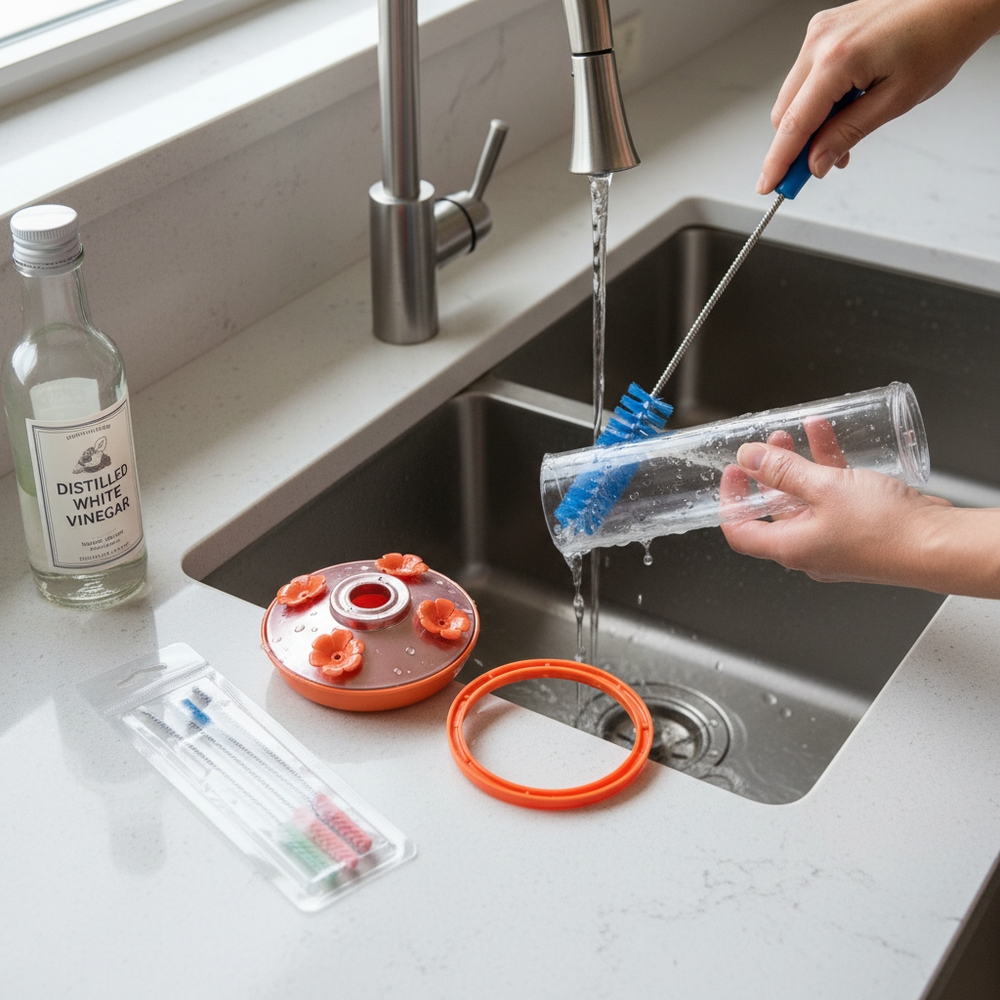
- Long Bottle Brush: Essential for reaching the bottom of 32-ounce nectar reservoirs.
- Micro-Port Brushes: Tiny, flexible wire brushes designed specifically to push through the small feeding ports where black mold loves to hide.
- Affiliate Pick: Ergonomic Feeder Cleaning Brush Set
3. The Deep Cleaning Process
Forget bleach. Bleach leaves a toxic residue and a harsh odor that will scare Orioles away. The safest and most effective cleaning agent is plain White Vinegar.
Step 1: Disassembly and Rinsing
Take the feeder completely apart. Remove the jelly cups, unscrew the base from the nectar reservoir, and pop out any bee guards. Rinse everything thoroughly with hot tap water to remove the bulk of the sticky jelly and old nectar.
Step 2: The Vinegar Soak
Fill a small bucket or your sink with a solution of 1 part white vinegar to 4 parts hot water.
- Drop all the disassembled feeder parts into the solution.
- Let them soak for 15-20 minutes. The acetic acid in the vinegar will naturally kill black mold spores and break down hardened sugar deposits.
Step 3: Scrubbing the Danger Zones
Take your brushes and scrub every surface.
- Pay special attention to the threads where the bottle screws into the base.
- Use the micro-brushes to vigorously scrub the inside of every single yellow feeding port. Mold spores cling to the tiny crevices inside these ports.
Step 4: The Rinse and Dry (Crucial!)
Rinse all parts under cold running water for a full minute to remove any lingering vinegar scent.
- Do not reassemble wet. Let the parts air-dry completely on a dish rack. Refilling a wet feeder traps unsterilized tap water inside the nectar, accelerating spoilage.
4. Specific Tips for Jelly Cups and Orange Spikes
- Jelly Cups: Grape jelly turns into a cement-like glue when baked in the sun. If you have glass jelly cups, you can safely run them through the top rack of your dishwasher. If they are plastic, use the vinegar soak.
- Fruit Spikes: When you replace an old, dried-out orange half, don’t just stick a new one on. Wipe the metal or wooden spike down with a vinegar-soaked cloth to remove the sticky, fermented juice from the previous orange.
Conclusion
A clean feeder is a safe feeder. By investing in a dedicated set of micro-brushes from Amazon and adopting the 1:4 vinegar soaking method, you can easily eradicate deadly black mold and stop fermentation in its tracks. It takes an extra ten minutes of your week, but ensuring the health and safety of the beautiful Orioles visiting your yard is worth every second. Keep it clean, and keep them coming back!