Published
- 5 min read
Attracting Bullock's Orioles: Tips for Western Birders
Attracting Bullock’s Orioles: Tips for Western Birders
When most people picture an Oriole, they envision the bright, Halloween-orange and jet-black plumage of the Baltimore Oriole. However, if you live west of the Great Plains, your primary Oriole visitor is likely a different species altogether: the magnificent Bullock’s Oriole.
While they share many similarities with their eastern cousins, Bullock’s Orioles have distinct physical characteristics and slightly different behavioral preferences. To successfully attract a flock of Bullock’s Orioles to your western backyard, you must understand their specific migration patterns and tailor your feeding station to their unique tastes.
In this guide, I will break down the differences between the species and provide expert tips on how to turn your western yard into a Bullock’s Oriole sanctuary.
1. Identification: Spotting the Bullock’s Oriole
Before you can feed them, you need to know what you are looking for.
The Adult Male Bullock’s
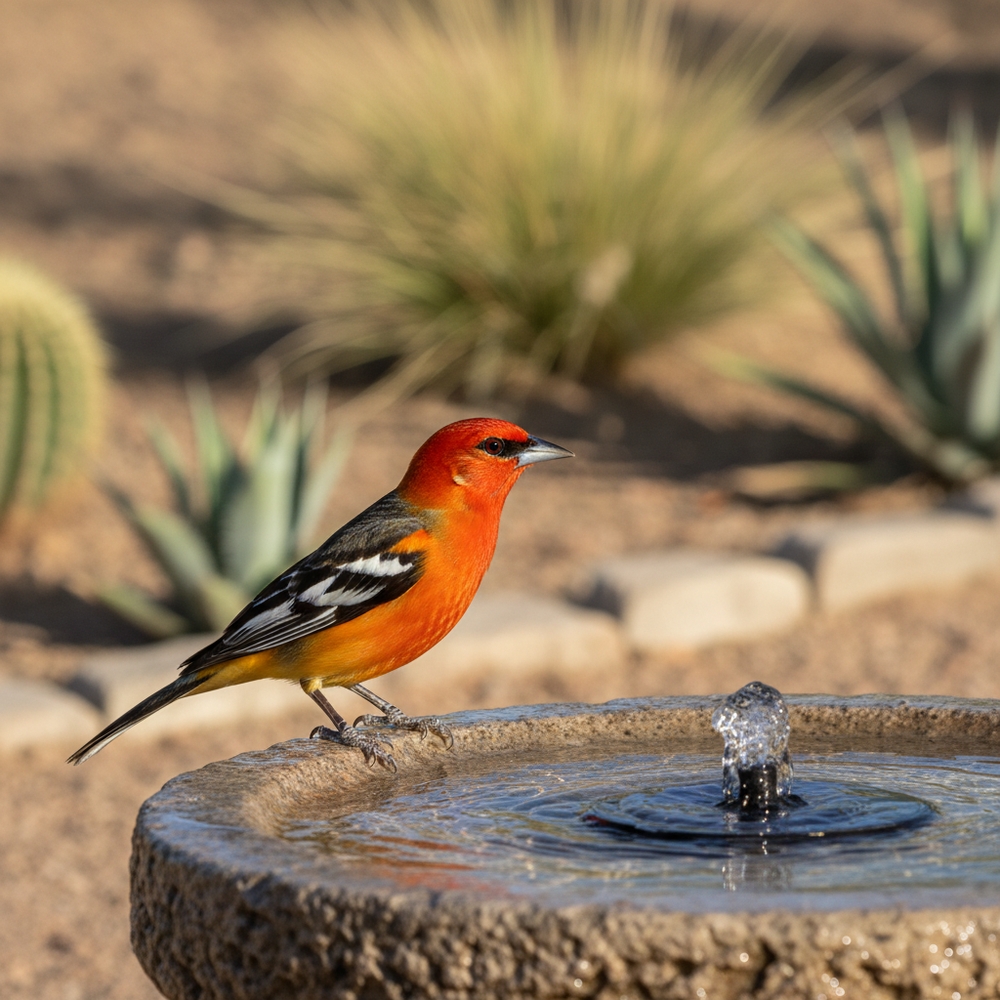
While Baltimore Orioles have solid black hoods, the male Bullock’s Oriole has a striking orange face with a distinct black eye-line (like a mask) and a black throat patch. Their bodies are a slightly more yellowish-orange, and they feature large, prominent white wing patches that flash brilliantly in flight.
The Female and Juvenile
Females and first-year males are much paler. They have yellowish breasts, gray backs, and lack the striking black markings of the adult males. They can often be confused with female Western Tanagers, but the Oriole is noticeably larger with a longer, sharper beak.
2. The Western Migration Timeline
Bullock’s Orioles winter in Mexico and Central America, migrating north into the western United States and southwestern Canada to breed in the spring.
- The Early Arrivals (California, Arizona, New Mexico): Scouts can arrive as early as mid-to-late March.
- The Northern Push (Oregon, Washington, Idaho, Montana): The main flock usually arrives between mid-April and early May.
- The Strategy: Just like with Baltimore Orioles, the “Scout Strategy” is critical. You must have your feeders hung and filled two weeks before you expect the first arrivals. If a scout finds a reliable food source in your yard, they will likely stay for the entire breeding season.
3. The Bullock’s Diet: Tweaking the Menu
Bullock’s Orioles share the same sweet tooth as Baltimore Orioles, but there are a few regional tweaks you can make to your buffet.
1. The Classic Grape Jelly
This is still the undisputed king of Oriole bait. However, in the arid western climates, jelly can dry out into a hard, inedible crust very quickly.
- The Fix: You must change the jelly every two days. If it starts to look dry or crystallized, the birds will ignore it. Use a feeder with small glass cups that are easy to wash and refill frequently.
- Affiliate Pick: Kettle Moraine Fruit & Jelly Cedar Feeder
2. The Fruit Preference: Beyond Oranges
While all Orioles love halved oranges, Bullock’s Orioles are also highly attracted to other dark, sweet fruits native to their western breeding grounds.
- The Strategy: Try offering halved dark cherries, ripe plums, or even sliced grapes on your fruit spikes alongside the oranges. The variety can often draw in birds that are ignoring a standard orange slice.
3. Nectar and Water in Arid Climates
In the hot, dry western summers, a reliable source of clean water is often just as attractive as food.
- Nectar: Use a standard 1:4 sugar-to-water ratio. Because of the intense western sun, you must place your nectar feeder in the deep shade to prevent rapid fermentation.
- The Bird Bath: A standard deep bird bath won’t work. Orioles prefer moving, shallow water. Adding a solar fountain pump to a shallow basin is an irresistible draw for a dusty, migrating Bullock’s Oriole.
- Affiliate Pick: Solar Bird Bath Fountain Pump
4. Habitat: The Cottonwood Connection
Bullock’s Orioles prefer open woodlands, riparian areas (corridors along rivers and streams), and parks with large, isolated trees.
- The Ideal Trees: In the West, they are particularly fond of nesting in Cottonwoods, Willows, and Sycamores. If you have these trees in or near your yard, you have a massive advantage.
- Nesting Materials: Like the Baltimore, the Bullock’s weaves an intricate, hanging pendulum nest. You can encourage them to build in your yard by providing a suet cage stuffed with natural cotton fibers, horsehair, and thin strips of natural twine.
Conclusion
Living in the West doesn’t mean you miss out on the Oriole magic. The Bullock’s Oriole is a stunning, fascinating bird that will readily visit your yard if you provide the right environment. By hanging your feeders early, offering a varied fruit buffet, and providing a clean, moving water source, you can turn your western backyard into a premier destination for these beautiful migrants.