Published
- 5 min read
The 3 Best Trees to Plant for Orioles: Creating a Natural Habitat
The 3 Best Trees to Plant for Orioles: Creating a Natural Habitat
You can buy the most expensive nectar feeder on Amazon and fill it with premium grape jelly, but if your yard consists of a flat, perfectly manicured grass lawn with zero mature trees, you will struggle to attract Orioles.
Orioles are canopy dwellers. They spend their lives moving through the upper branches of tall trees, hunting for caterpillars, eating fruit, and weaving their intricate hanging nests. A feeder is just a restaurant; the trees are their home. If you want to transform your yard from a quick pit-stop into a permanent breeding territory, you must think beyond the feeder and start focusing on habitat.
As a landscaping and birding expert, I advise my clients to look at their yards from the bird’s perspective. In this guide, I will share the top three native tree species you should plant to provide the natural food, shelter, and nesting structure that Baltimore and Bullock’s Orioles crave.
1. The Ultimate Nesting Tree: The American Elm (Ulmus americana)
If you have ever seen an Oriole’s teardrop-shaped, woven nest, you might have noticed it is almost always hanging from the very tip of a long, sweeping, flexible branch. The Oriole chooses these specific branches because they are too thin and bouncy for predators like raccoons or domestic cats to navigate.
- Why Orioles Love It: The American Elm is famous for its graceful, weeping branches. These long, flexible branch tips are the absolute perfect architecture for an Oriole to anchor her woven nest.
- The Food Source: Elms are also host to hundreds of species of native caterpillars and insects. When the Orioles shift from a sugar diet to a protein diet to feed their chicks in the summer, an Elm tree is a veritable grocery store right outside their front door.
- The Modern Solution: Historically, American Elms were decimated by Dutch Elm Disease. Today, you must ensure you purchase a disease-resistant cultivar (like the ‘Princeton’ or ‘Valley Forge’ Elm) from a reputable local nursery.
2. The Spring Fuel Source: The Native Mulberry Tree (Morus rubra)
Before they switch to insects, Orioles are strict frugivores (fruit eaters). While they appreciate the orange halves you leave out, their natural diet consists of small, dark, wild berries.
- Why Orioles Love It: The Red Mulberry is a native North American tree that produces fruit in late spring and early summer—exactly when Orioles need massive calorie boosts for breeding and nesting. A fruiting mulberry tree acts as a magnet for dozens of species of songbirds.
- The Warning: Mulberry trees are “messy.” The dark purple berries will stain sidewalks, driveways, and cars if parked underneath.
- The Placement Strategy: Always plant a Mulberry tree at the far edge of your property, away from patios and hardscaping. It creates a wild “bird buffer zone” at the edge of your yard.
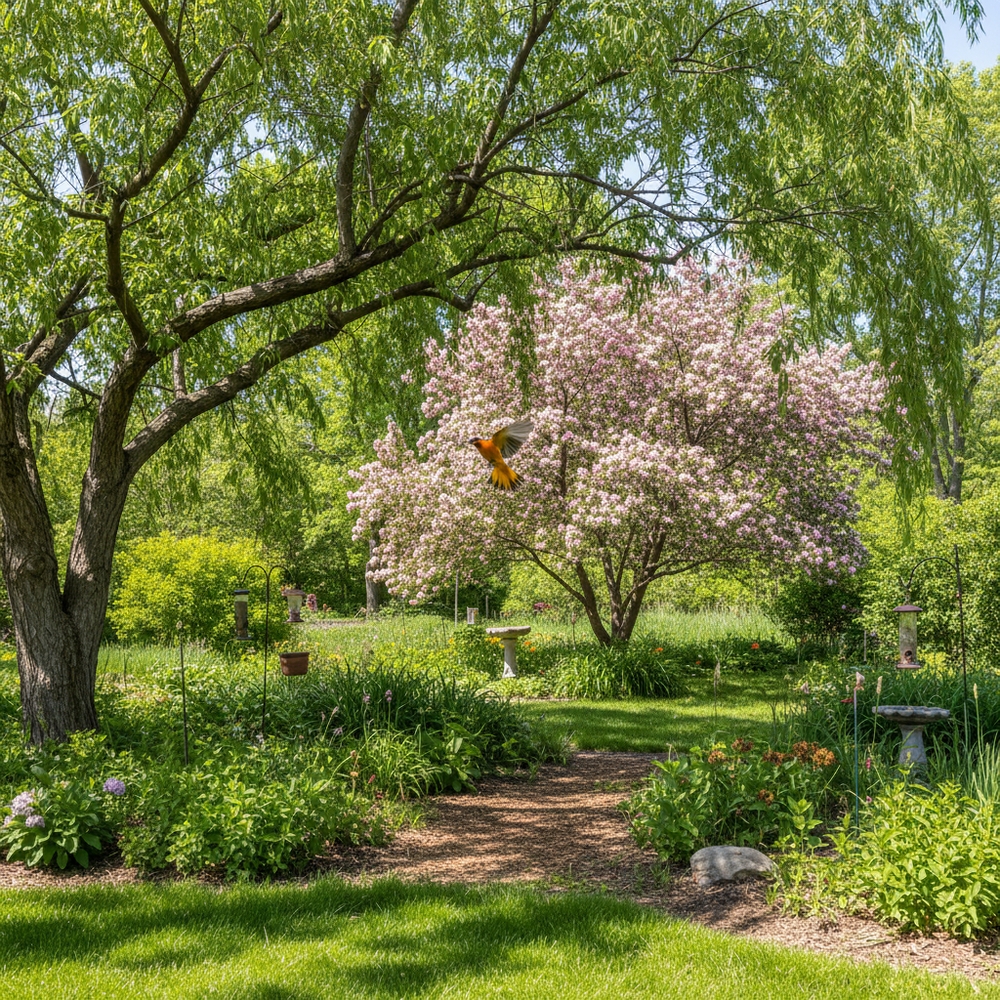
3. The Shelter and Snack Combo: The Flowering Crabapple (Malus)
If you don’t have the space for a massive 80-foot Elm or the tolerance for a messy Mulberry, the Flowering Crabapple is the perfect mid-sized compromise for smaller suburban yards.
- Why Orioles Love It (Spring): In the early spring, crabapples erupt in dense, fragrant blossoms. These blossoms attract early-season insects and small pollinators, which the newly arrived, exhausted Orioles will readily eat.
- Why Orioles Love It (Fall): In the late summer and fall, the tree produces small, tart apples. While humans find them bitter, migrating Orioles love them.
- The Structure: Crabapple trees have dense, twisting branch structures that provide excellent cover from aerial predators like hawks.
4. The Short-Term Fix: Birding Gear
Trees take years to mature. If you just planted a sapling today, it won’t be supporting an Oriole nest next spring. What do you do in the meantime?
While you wait for your habitat to grow, you must rely heavily on high-quality feeding stations to simulate abundance.
- The Water Factor: Trees provide moisture via dew on their leaves. Since you lack the canopy, you must provide moving water. A shallow bird bath with a bubbling solar fountain is the best way to mimic the natural sound of a stream.
- Affiliate Pick: Solar Bird Bath Fountain Pump
- The Nesting Substitute: You cannot provide the branch, but you can provide the materials. Hang a suet cage stuffed with natural cotton fibers and pet hair to help the Orioles build nests in the mature trees in your neighbor’s yard, keeping them close by.
- Affiliate Pick: Songbird Essentials Nesting Material Dispenser
Conclusion
Feeding Orioles grape jelly is wonderful, but creating a natural ecosystem is the ultimate goal of any dedicated backyard birder. By planting native species like the American Elm, Red Mulberry, or Flowering Crabapple, you provide the structural safety and natural food sources that have supported these birds for millennia. Plant a tree today, and enjoy the beautiful orange returns for generations to come.