Published
- 5 min read
Master Weavers: Understanding the Unique Hanging Nests of the Oriole
Master Weavers: Understanding the Unique Hanging Nests of the Oriole
When most people think of a bird’s nest, they picture a classic, cup-shaped structure made of twigs and mud, sitting securely in the fork of a tree branch. Robins, Blue Jays, and Cardinals all follow this standard architectural design.
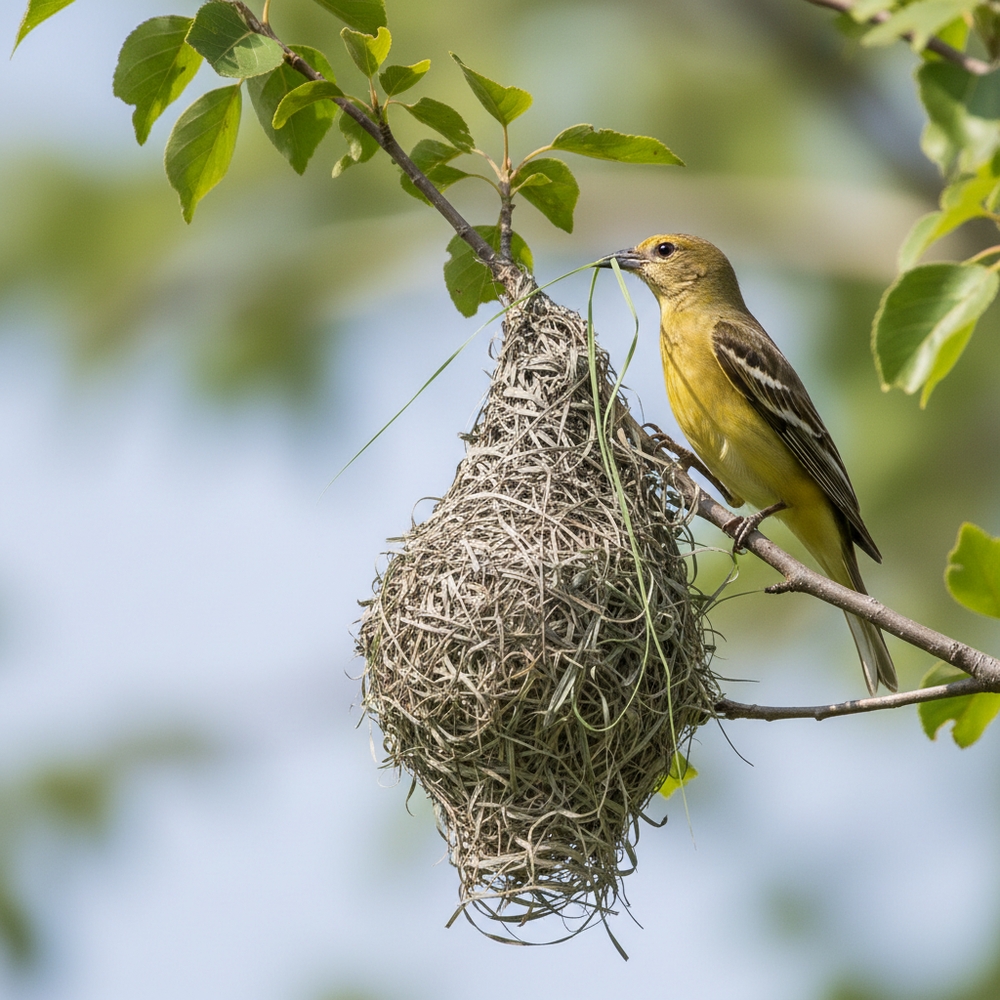
However, if you look high into the canopy of an Elm or Maple tree in late spring, you might spot something entirely different: a gray, teardrop-shaped pouch dangling precariously from the very tip of a thin, swaying branch. You haven’t found a hornet’s nest or a piece of trash caught in the wind—you have discovered the architectural masterpiece of the Baltimore Oriole.
Orioles belong to the family Icteridae, and their nesting behavior is one of the most fascinating aspects of their life cycle. As a backyard birder, understanding how they build these intricate homes can help you locate them in your yard and even assist them in the construction process.
1. The Architecture of a Pendulum Nest
The female Baltimore Oriole is the master architect and sole builder of the nest. It is a grueling process that takes her anywhere from one to two weeks to complete, requiring thousands of individual intricate knots and weaves.
Why Hang from a Thin Branch?
The placement of the nest is a brilliant evolutionary defense mechanism. By suspending the nest at the outermost, thinnest tip of a weeping branch (often 30 to 40 feet in the air), the nest is virtually inaccessible to heavy predators like raccoons, snakes, and domestic cats. The branch simply cannot support the weight of the predator.
The Three Stages of Construction:
- The Framework: She begins by weaving strong, long fibers (like plant stems, grapevine bark, or horsehair) securely around the supporting branch to create a hanging loop.
- The Pouch: Hanging upside down, she uses her beak like a needle, rapidly weaving plant fibers in and out to create a deep, sock-like pouch. The pouch must be incredibly strong to withstand high winds and the eventual weight of growing chicks.
- The Soft Interior: Finally, she lines the bottom bowl of the pouch with soft materials like dandelion fluff, fine grasses, and animal hair to create a warm, insulated bed for her eggs.
2. How to Spot an Oriole Nest in Your Yard
Spotting a nest during the spring and summer is incredibly difficult. Orioles purposely build them in dense foliage to hide them from aerial predators like hawks and Blue Jays.
- Look High and Outside: Scan the very top canopy of tall deciduous trees. Look at the outermost, drooping branches.
- Follow the Female: The easiest way to find a nest is to quietly observe a female Oriole at your feeder. When she leaves, track her flight path into the trees. During construction, she will make dozens of trips back and forth carrying long fibers in her beak.
- The Winter Reveal: The best time to actually see Oriole nests is in the winter, after the leaves have fallen. These nests are woven so tightly that they often survive the harshest winter storms, dangling visibly from the bare branches until spring. (Note: Orioles rarely reuse old nests, preferring to build fresh ones each year).
3. How to Help: Providing Nesting Materials
If you want to encourage Orioles to nest in your yard, providing a ready supply of high-quality nesting materials is a massive incentive. A female Oriole will preferentially nest in an area where building materials are abundant, as it saves her vital energy.
What to Provide:
- Natural Fibers: Leave long, thin plant stems (like milkweed or tall grasses) in your garden.
- Pet Hair: If you brush your dog or horse, leave tufts of the clean hair in a suet cage.
- Yarn and String: You can cut pieces of 100% natural cotton or wool yarn into 4-to-6-inch strips. Never use synthetic yarn (nylon/polyester) or fishing line, as these can tightly wrap around a bird’s leg or neck, causing fatal injuries.
The Easy Solution: Nesting Material Stations
The safest and most effective way to offer materials is to buy a pre-filled nesting station that dispenses safe, natural cotton fibers. Hang it near your jelly feeders in early May.
- Affiliate Pick: Songbird Essentials Nesting Material Dispenser. This wire globe is stuffed with safe, natural cotton that Orioles can easily pull out strand by strand.
Conclusion
The hanging nest of the Baltimore Oriole is a marvel of avian engineering. It is strong enough to survive hurricanes, soft enough to cradle fragile eggs, and positioned perfectly to outsmart predators. By offering natural nesting materials like cotton yarn via a dedicated dispenser from Amazon, you can assist the female in her monumental task and increase the chances of hosting a thriving Oriole family right in your own backyard canopy.