Published
- 4 min read
Do Orioles Eat Seeds? Understanding the True Oriole Diet
Do Orioles Eat Seeds? Understanding the True Oriole Diet
It is a common scenario for beginner birders: you buy a large, expensive bag of premium wild bird seed—packed with sunflower seeds, millet, and safflower—fill your hanging tube feeder, and wait. Soon, the yard is alive with Cardinals, Chickadees, and Finches. Then, a brilliant orange Baltimore Oriole lands in your tree. You hold your breath, waiting for it to visit the feeder. Instead, it looks around for a moment and flies away.
Why didn’t the Oriole eat the seeds? Did you buy the wrong brand?
The answer is simple: Orioles do not eat seeds.
Unlike the heavy-beaked seed-crackers (like Cardinals or Grosbeaks) that dominate standard backyard feeders, Orioles have a completely different anatomical structure and a highly specialized diet. If you want to attract and keep Orioles in your yard, you have to throw away the seed scoop and understand their true dietary needs.
1. Anatomy of an Oriole: The Beak Tells the Story
If you want to know what a bird eats, look at its beak.
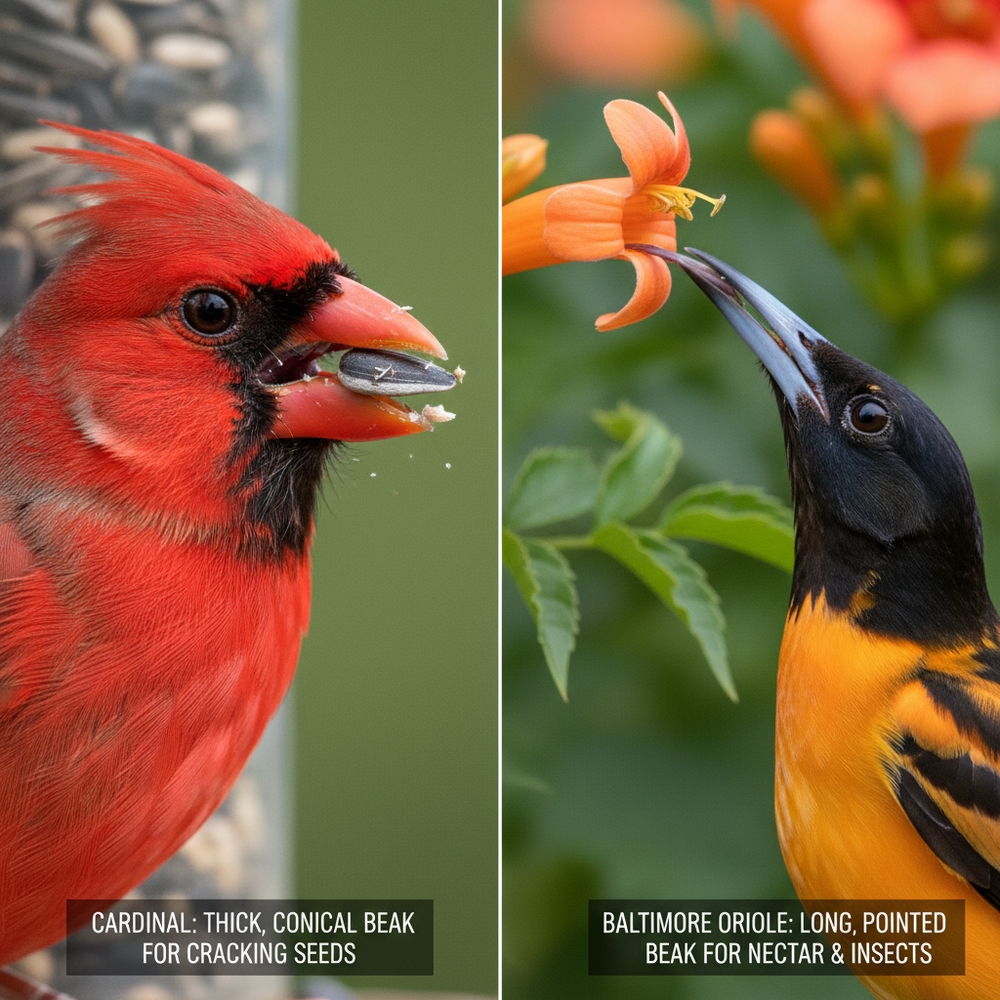
- Seed Eaters: Birds like the Northern Cardinal have short, thick, conical beaks designed to act like a nutcracker. They use immense jaw pressure to crack open hard sunflower shells.
- The Oriole Beak: An Oriole has a long, sharply pointed, and relatively thin beak. It is not built for crushing hard shells. Instead, it operates like a pair of precise tweezers and a straw. It is designed to pierce the skin of ripe fruit to drink the juice, probe deep into flowers for nectar, and snatch soft-bodied insects from leaves.
If an Oriole were to try and eat a hard black oil sunflower seed, it would struggle to crack it and expend more energy than the seed is worth.
2. The Spring Diet: Pure Sugar and Energy
When Orioles arrive in the United States and Canada in late April or early May, they have just completed a grueling, thousands-of-mile migration from Central America. They are exhausted, their fat reserves are depleted, and they need immediate, high-octane energy.
During the spring, their diet is almost exclusively sugar-based:
- Nectar: In the wild, they seek out spring-blooming flowers. In your backyard, they rely on commercial or homemade nectar (1 part sugar to 4 parts water).
- Fruit: They love dark, sweet fruits. Ripe orange halves, dark cherries, and mulberries are favorites.
- Grape Jelly: This is the ultimate backyard substitute for natural fruit sugars. A small cup of grape jelly provides a massive, easily digestible calorie bomb for a tired migrant.
3. The Summer Shift: The Protein Demand
Here is where the Oriole diet gets interesting. While they ignore seeds all year, they also drastically reduce their sugar intake during the peak summer months.
Once Orioles have built their nests and laid their eggs, their focus shifts entirely to their chicks. Baby birds cannot grow on sugar; they require high amounts of protein and calcium for bone and feather development.
During June and July, the adult Oriole becomes an aggressive insect hunter.
- The Natural Diet: They hunt the high canopy for caterpillars (including the destructive tent caterpillars), spiders, beetles, and grasshoppers. They are actually highly beneficial for pest control in your garden!
- The Backyard Substitute: If you want to keep them visiting your station during the summer, you must offer protein. Stop filling the jelly cups and start offering dried mealworms or insect-infused suet dough.
4. The Exceptions (When They Might Eat Seed)
In nature, there are rarely absolute rules. While Orioles are categorized as frugivores (fruit eaters) and insectivores, there is one very specific circumstance where an Oriole might be seen eating a seed.
If a late-season snowstorm hits or an unseasonal freeze kills off the early spring insect population and freezes the fruit, a desperate, starving Oriole might pick at a piece of hulled sunflower seed or suet. However, this is a last resort for survival, not a dietary preference.
Conclusion
If your goal is to attract Baltimore or Bullock’s Orioles, your expensive bag of wild bird seed is useless. To succeed, you must cater to their specific anatomy and seasonal needs. By offering specialized nectar feeders and grape jelly in the spring, and shifting to high-protein suet and mealworms in the summer, you align your backyard buffet with the natural dietary cycle of these magnificent orange birds. Leave the seeds for the Cardinals!