Published
- 4 min read
Early Arrivals: What to Do When Your Oriole Nectar Freezes
Early Arrivals: What to Do When Your Oriole Nectar Freezes
As discussed in our migration calendar guide, the “Scout Strategy” requires you to hang your Oriole feeders a full two weeks before you expect the birds to arrive. In the northern United States and Canada, this often means putting feeders out in mid-to-late April.
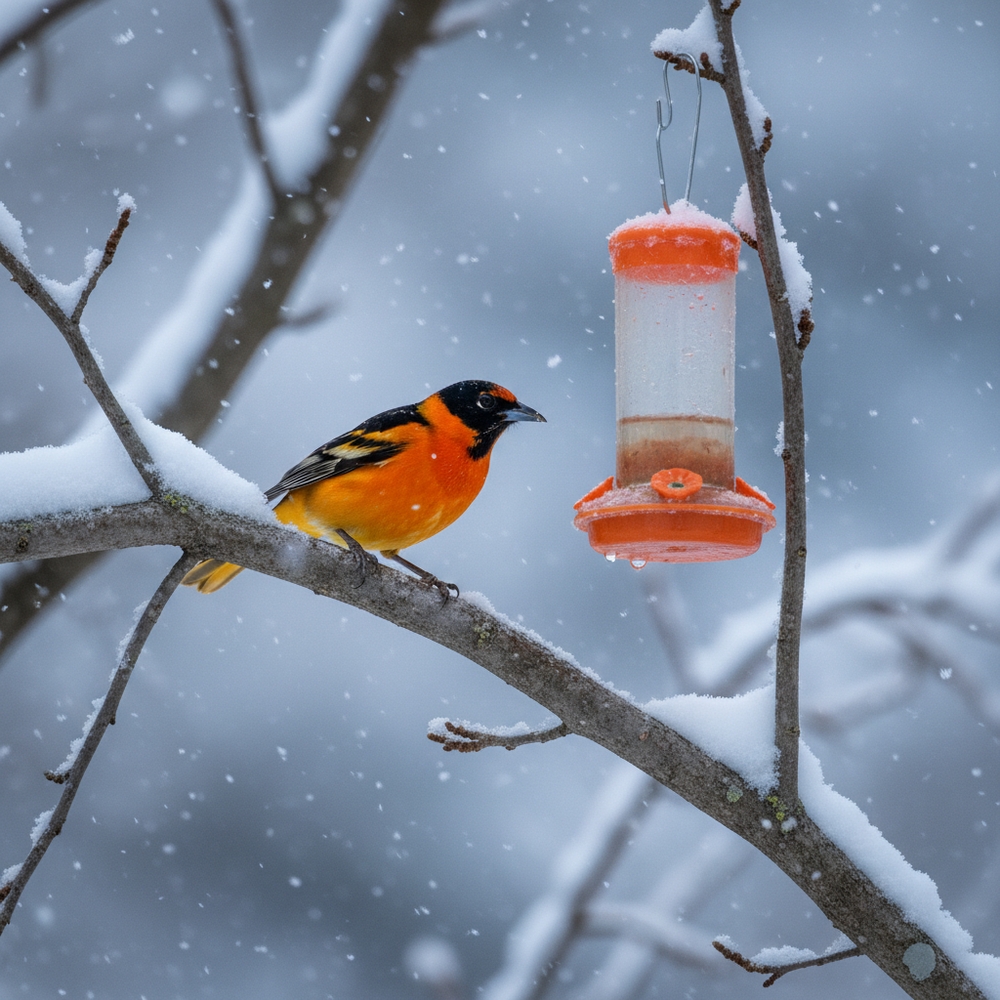
While the calendar might say it’s spring, Mother Nature often disagrees. It is incredibly common for an early wave of migrating Orioles to arrive right as a late-season snowstorm or a deep overnight freeze hits.
This presents a critical, life-or-death situation for the birds. They have exhausted their fat reserves flying north, only to find the insect population dead from the freeze and the fruit blossoms destroyed. If they find your feeder, it is a lifesaver—unless the nectar inside is a solid block of ice.
In this guide, I will share the professional strategies for managing freezing nectar and ensuring your early-arriving Orioles have the liquid energy they need to survive the cold snap.
1. The Physics of Freezing Nectar
Standard Oriole nectar (1 part sugar to 4 parts water) does not freeze at 32°F (0°C). The dissolved sugar acts as a mild antifreeze, lowering the freezing point.
- The Slush Point: At around 27°F to 29°F, 1:4 nectar will begin to turn into a thick slush. The birds cannot drink this through the small ports.
- The Solid Freeze: At around 26°F and below, the nectar will freeze solid.
- The Danger to Feeders: If you use a glass nectar feeder, a solid freeze will cause the liquid to expand, shattering the glass and ruining your feeder.
2. Strategies for Cold-Weather Feeding
If the forecast calls for overnight temperatures below 28°F, you must intervene.
The “Morning Swap” (Most Effective)
Do not leave your nectar out overnight if a hard freeze is coming.
- Bring the feeder inside at dusk.
- Store it in the refrigerator overnight (or on the counter if your house is cool).
- Crucial Step: You must re-hang the feeder at first light, before the birds wake up to forage. Orioles will be desperately searching for food at 6:00 AM.
The Heat Source Hack
If you are expecting several days of sub-freezing daytime temperatures, you need to actively heat the feeder.
- The Solution: Attach a small, specialized feeder heater to the bottom of your nectar reservoir. These devices use a tiny 7-watt or 15-watt incandescent bulb to generate just enough ambient heat to keep the liquid above freezing, even in 10°F weather.
- Affiliate Pick: Hummingbird & Oriole Feeder Heater Attachment
The “Hand-Warmer” Trick
If a sudden snowstorm hits and you don’t have a specialized heater, use chemistry!
- The Trick: Take two standard chemical hand-warmers (the kind you use for skiing), activate them, and tape them to the underside of the feeder base. They will generate enough heat to keep the nectar liquid for 8-10 hours during the day.
3. Supplementing with High-Fat Foods
In freezing temperatures, a bird’s metabolism goes into overdrive just to maintain body heat. Sugar provides quick energy, but fat provides long-lasting heat.
If your Orioles are trapped in a snowstorm, you must temporarily alter their diet.
- The Temporary Shift: While they normally ignore it, a starving Oriole will eat high-fat suet if no other food is available. Offer a high-quality suet dough (which won’t freeze rock-hard like raw suet).
- Warm Jelly: Grape jelly will also freeze solid. Bring it inside at night, and serve it slightly warm (not hot) in the morning.
- Affiliate Pick: C&S Orange Suet Dough (Winter Feeding)
Conclusion
An early spring freeze is a true test of a backyard birder’s dedication. When the temperatures plummet, the brilliant orange Orioles in your yard are relying entirely on you for survival. By bringing feeders in at night, utilizing specialized feeder heaters, and supplementing their diet with high-fat suet, you can shepherd your flock safely through the storm and guarantee their loyalty to your yard for the rest of the summer.