Published
- 5 min read
The Complete Oriole Migration Calendar: When to Put Out Your Feeders
The Complete Oriole Migration Calendar: When to Put Out Your Feeders
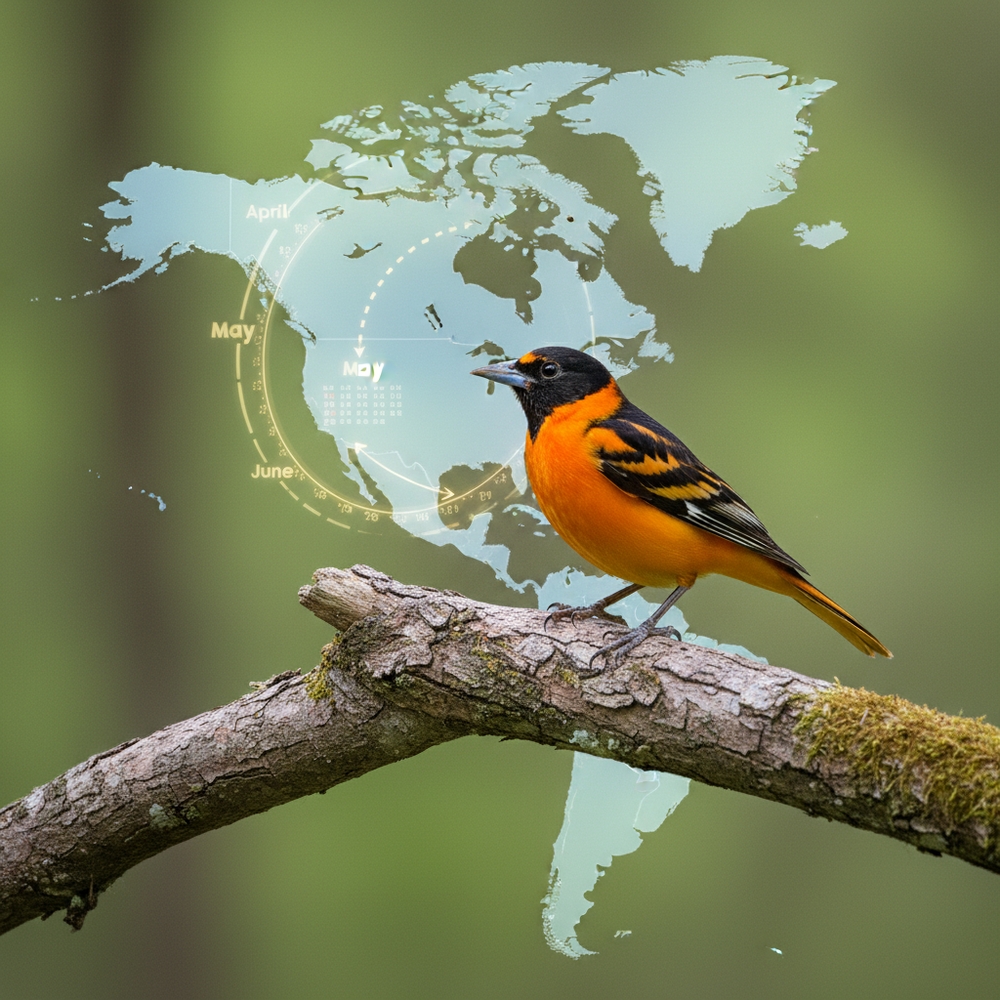
Every spring, backyard birders across North America play a high-stakes waiting game. They clean their feeders, buy jars of grape jelly, and boil fresh sugar water. But if you hang the feeder too late, the brilliant orange flash of a migrating Baltimore Oriole will pass right over your house, completely ignoring your empty yard.
Unlike Cardinals or Blue Jays, which stick around all year, Orioles are long-distance neo-tropical migrants. They spend their winters soaking up the sun in Central and South America, and fly thousands of miles north to the United States and Canada in the spring to breed. Their arrival in your specific state is highly predictable, but the window to attract them is incredibly narrow.
In this expert guide, I will break down the exact Oriole migration timeline. I will teach you the “Scout Strategy” for early spring, how their diet changes in the summer, and exactly when it is safe to take your feeders down in the fall.
1. The Spring Arrival: The “Scout Strategy”
The most important concept in feeding Orioles is understanding the “Scouts.” The first Orioles to arrive in any given region are usually the older, dominant males. They fly ahead of the main flock to claim the best breeding territories.
If a scout male flies into your yard, finds a bright orange feeder, and takes a drink of high-energy nectar, he will likely claim your yard as his summer home. He will then sing loudly to attract females to the area. If your feeder is not out when the scout arrives, he will move on to your neighbor’s yard, and you won’t see an Oriole until next year.
General Spring Timeline by Region:
- Deep South (Gulf Coast, Florida, Texas): Late March to Early April. The first migrants are making landfall after flying straight across the Gulf of Mexico. They are exhausted and desperate for sugar.
- Mid-South & Central US (Carolinas, Tennessee, Missouri): Mid-April.
- Midwest & Northeast (Ohio, Pennsylvania, New York): Late April to the first week of May. This is the prime time for “Oriole Fever” in the northern states.
- Canada (Ontario, Quebec, Maritimes): Mid-May.
The Expert Rule: Look at the timeline for your region, and put your feeders out two weeks early. It is better to have an unused feeder hanging in the rain for a week than to miss the scout by a single day.
2. Tracking the Flock: The Digital Advantage
You don’t have to guess when the birds are coming. In 2026, citizen science has made tracking migration incredibly easy.
- Use websites like Journey North or eBird. These platforms feature real-time, interactive maps where thousands of birders report their first Oriole sightings of the year.
- When you see sightings reported in the state immediately south of you, sprint to the kitchen, make your nectar, slice your oranges, and get your feeders hung on your shepherd’s hooks immediately.
- Affiliate Pick: Ashman Adjustable Double Shepherd’s Hook. Ensure your hanging station is ready and secure before the birds arrive.
3. The Summer Lull: Where Did They Go?
This happens to almost every beginner birder. You have a massive flock in May, and by late June, the feeders are suddenly ghost towns. They didn’t leave.
Once Orioles establish a territory and hatch their eggs, the parents stop eating jelly. Baby birds need high protein to grow feathers and muscle; sugar water won’t cut it. The adults spend June and July hunting deep in the forest canopy for caterpillars, spiders, and beetles.
- What to do: Do not take your feeders down! Keep a small amount of fresh jelly and nectar available for the occasional quick energy boost, but supplement your station with high-protein foods like dried mealworms or orange-infused suet.
- Affiliate Pick: C&S Orange Suet Dough
4. The Fall Departure: Fueling the Return Journey
In late August and September, the Orioles prepare for the grueling flight back to Central America. Their diet shifts back to intense sugar and fruit consumption as they try to build up fat reserves for the trip.
- The Late Summer Surge: You will often see a sudden spike in feeder activity in late August. This is a mix of your local adults, their new juvenile offspring, and migrating birds from further north passing through your yard.
- When to stop feeding: Keep your feeders full and fresh through September. A common myth is that feeding birds “delays” their migration. This is false. Migration is triggered by the length of daylight, not food availability.
- The Takedown Rule: Leave your feeders out for two full weeks after you see your last Oriole. You never know when a late, straggling migrant will pass through in desperate need of a meal. Once two weeks of zero activity pass in late September or October, take them down, scrub them clean with your brush set, and store them for the winter.
Conclusion
Feeding Orioles is a seasonal commitment, not a year-round hobby. By understanding their migration patterns, tracking the “Scout” males in the spring, adapting your food offerings in the summer, and keeping the buffet open late into the fall, you guarantee your backyard remains a vital, life-saving oasis for these magnificent travelers. Get your feeders prepped, watch the migration maps, and get ready for a beautiful spring.