Published
- 5 min read
The Best Binoculars for Spotting High-Canopy Orioles
The Best Binoculars for Spotting High-Canopy Orioles
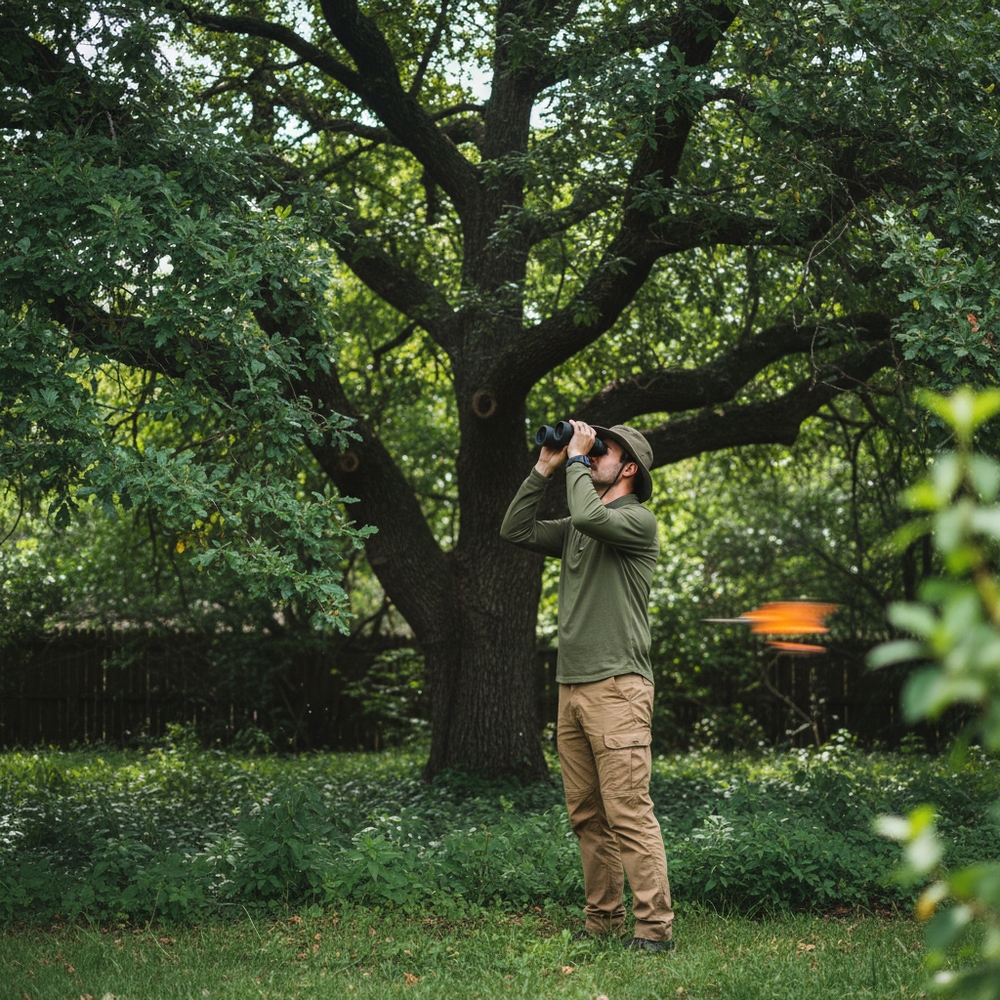
If you have set up a jelly and nectar feeding station, you will hopefully get fantastic, close-up views of Orioles feeding near your patio. However, Orioles spend the vast majority of their day high in the canopy of mature deciduous trees. They hunt for caterpillars, weave their intricate pendulum nests at the very tips of branches, and sing their flute-like songs from 40 feet in the air.
If you are relying on the naked eye or a cheap, dusty pair of “theater glasses” you found in a drawer, you are missing out on 80% of the Oriole’s daily life. Trying to spot a bird in the dense, shaded leaves of a tall tree requires specific optical capabilities.
As a seasoned birder, I am frequently asked which binoculars are “best.” In 2026, you don’t need to spend $2,000 on German optics to get a breathtaking view. In this guide, I will break down the exact specifications you need for high-canopy birding and review the top-rated models available on Amazon that offer premium clarity at an accessible price.
1. The “Numbers” Explained: Why 8x42 is the Birding Gold Standard
When you look at binoculars, you see a set of numbers, like 8x42 or 10x25.
- The First Number (Magnification): This indicates how many times closer the object will appear. While a 10x or 12x magnification sounds better, it is actually worse for backyard birding. Higher magnification creates a narrower field of view, making it incredibly difficult to find a fast-moving bird in the trees. It also amplifies the natural shake of your hands. 8x magnification is the sweet spot for stability and tracking.
- The Second Number (Objective Lens Diameter): This is the size (in millimeters) of the large lenses at the front. The larger the number, the more light the binoculars gather. A 25mm lens is useless in the dark shadows of a leafy tree. A 42mm lens gathers enough light to make the bright orange plumage of an Oriole pop, even in dense shade or during the dim hours of dawn and dusk.
Therefore, the universal gold standard for birding is 8x42.
2. Key Features for High-Canopy Spotting
Beyond the magnification, there are three features you must look for:
- Fully Multi-Coated Lenses (FMC): This means multiple layers of anti-reflective coatings have been applied to all air-to-glass surfaces. It drastically reduces glare and increases color fidelity—crucial for distinguishing between a Baltimore and an Orchard Oriole.
- Phase-Corrected Prisms: In roof-prism binoculars (the straight-tube style), light waves can shift out of phase, reducing sharpness. Phase-correction coatings keep the image incredibly crisp.
- Eye Relief: If you wear glasses, you need “long eye relief” (at least 15mm). This allows you to see the entire field of view without taking your glasses off.
3. The Best 8x42 Binoculars on Amazon
Here are the top three options that provide professional-level clarity for backyard birders.
1. The Undisputed Value King: Nikon ProStaff 3S 8x42
Nikon is legendary in the world of optics, and the ProStaff line brings their high-end glass to an affordable price point.
- Why it wins: It is incredibly lightweight (only 19.9 ounces), meaning you can hold them up to the canopy for long periods without arm fatigue. The lenses feature highly reflective silver-alloy mirror coatings, providing a remarkably bright image in shaded trees.
- The Verdict: The absolute best entry-level premium binocular for new birders.
- Get it on Amazon: Nikon ProStaff 3S 8x42 Binoculars
2. The Step-Up Upgrade: Vortex Optics Diamondback HD 8x42
If you have a bit more budget, Vortex offers an optical experience that rivals binoculars costing twice as much.
- Why it wins: The “HD” optical system delivers stunning resolution and cuts down on chromatic aberration (the annoying purple fringe you see around high-contrast objects, like a dark bird against a bright sky). They are fully waterproof and argon-purged to prevent internal fogging.
- The Verdict: The enthusiast’s choice. Incredible durability and an unconditional lifetime warranty.
- Get it on Amazon: Vortex Optics Diamondback HD 8x42
3. The Budget Brawler: Celestron Nature DX 8x42
If you want to stay under $150 but still demand phase-coated prisms and fully multi-coated lenses, Celestron is the answer.
- Why it wins: It punches way above its weight class in terms of optical clarity. The close-focus is excellent (6.5 feet), meaning they are just as useful for watching an Oriole on a feeder right outside your window as they are for spotting one high in an oak tree.
- Get it on Amazon: Celestron Nature DX 8x42 Binoculars
Conclusion
You cannot truly appreciate the life and behavior of the Orioles in your yard without a good pair of binoculars. Squinting at silhouettes in the trees is frustrating and often leads to misidentification. By investing in a quality 8x42 optic like the Nikon ProStaff or Vortex Diamondback from Amazon, you open up a whole new world of brilliant color, intricate nesting behaviors, and breathtaking close-ups. Upgrade your gear, look to the canopy, and enjoy the show.