Published
- 5 min read
How to Make the Perfect Oriole Nectar at Home: The Golden Ratio
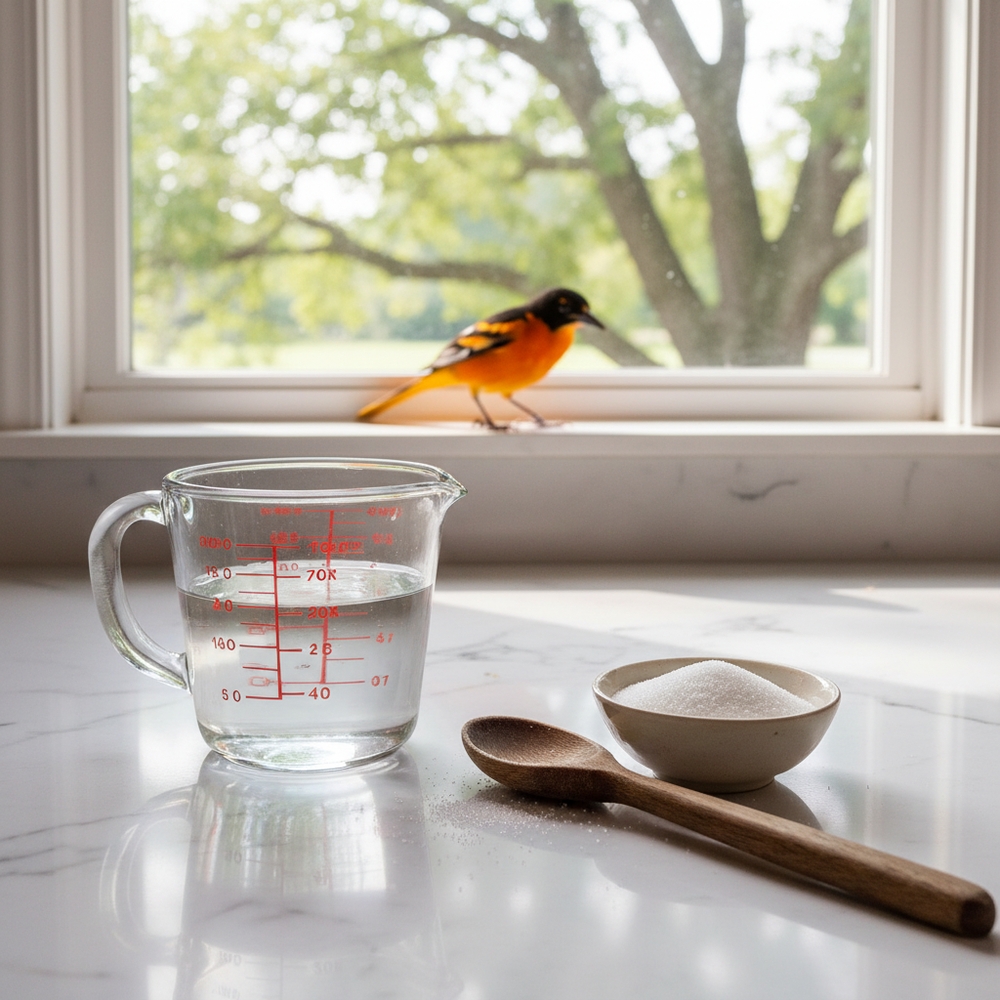
How to Make the Perfect Oriole Nectar at Home: The Golden Ratio
When spring arrives and the first flashes of orange appear in the high canopy, many backyard birders rush to the hardware store to buy a jug of bright-orange, pre-mixed Oriole nectar. It seems convenient, but as a birding expert, I strongly advise against it.
Commercial nectars are often expensive, packed with unnecessary preservatives, and frequently contain artificial dyes (like Red Dye #40 or Yellow #6) to achieve that bright orange color. These chemical dyes offer absolutely zero nutritional value and are increasingly suspected by ornithologists to be harmful to the delicate kidneys and livers of small birds.
The truth is, making the absolute best, safest, and most energizing nectar for your Orioles requires only two ingredients you already have in your kitchen, and it takes less than five minutes. In this guide, I will share the scientifically backed “Golden Ratio” for homemade Oriole nectar, how to prepare it safely, and the best practices for keeping it fresh.
1. The Golden Ratio: 1 Part Sugar to 4 Parts Water
This ratio is not arbitrary. In the wild, Orioles drink the nectar from spring-blooming flowers. The natural sucrose content of these flowers is approximately 20-25%. A mixture of 1 cup of sugar to 4 cups of water perfectly replicates this natural concentration, providing the exact caloric fuel an exhausted, migrating Oriole needs.
The Ingredients:
- Refined White Table Sugar: This is non-negotiable. Refined white sugar is pure sucrose, which is exactly what birds digest best.
- Clean Water: Tap water is fine, but if you have highly chlorinated or hard well water, filtered or spring water is preferred.
What NOT to Use (The Danger List):
- No Honey: Honey promotes rapid, deadly fungal and bacterial growth when mixed with water and left in the sun.
- No Artificial Sweeteners: Stevia, Splenda, or Aspartame provide zero calories. The bird will drink it, feel full, and starve to death.
- No Brown Sugar or Organic Raw Sugar: These contain molasses and high levels of iron, which are toxic to a small bird’s liver.
- NO DYE: Do not add food coloring. The orange plastic on your feeder is enough to attract them.
2. The Preparation Process
You do not need to boil the sugar water for an hour to make a “syrup,” but boiling the water first does serve two important purposes: it helps the sugar dissolve instantly, and it kills any impurities or chlorine in your tap water.
The 5-Minute Recipe:
- Measure: Bring 4 cups of water to a rolling boil on the stove or in a kettle.
- Mix: Remove the water from the heat and immediately stir in 1 cup of refined white sugar.
- Stir: Stir constantly for 30 seconds until the liquid is perfectly clear. If it is cloudy, the sugar hasn’t fully dissolved.
- Cool: CRITICAL STEP. Never pour hot nectar into a plastic feeder (it will warp or melt) and never feed warm nectar to birds. Let the mixture sit on the counter until it is completely at room temperature.
- Store: Pour what you need into your feeder, and store the excess in a sealed glass jar in the refrigerator for up to two weeks.
3. Serving and Maintenance: The “Freshness” Rule
Nectar is basically a petri dish for bacteria. The combination of sugar and the warm spring sun means your nectar will spoil quickly. Spoiled nectar ferments into alcohol and grows black mold, both of which are deadly to Orioles.
- When to Change It: If the temperature is between 60°F and 70°F, change the nectar and clean the feeder every 3 to 4 days. If the temperature exceeds 80°F, you must change it every 2 days. If it hits 90°F+, change it daily.
- Visual Cues: If the clear liquid looks cloudy, milky, or has black specks floating in it, throw it out immediately and scrub the feeder with hot water and a bottle brush.
- Affiliate Pick: Ergonomic Feeder Cleaning Brush Set. You need these to scrub inside the tiny nectar ports where mold hides.
4. Why Do They Stop Drinking in the Summer?
Many people think they made a “bad batch” of nectar when the Orioles suddenly stop visiting in late June. Do not worry; your recipe is perfect.
As mentioned in our other guides, once Orioles hatch their chicks, they stop looking for sugar (energy) and start looking for protein (insects and suet) to feed their growing babies. Keep a small amount of fresh nectar out, but supplement your feeding station with dried mealworms or orange-infused suet dough to keep the adults visiting.
- Affiliate Pick: C&S Orange Suet Dough
Conclusion
Making homemade Oriole nectar is the safest, healthiest, and most cost-effective way to feed your backyard visitors. By sticking strictly to the 1:4 ratio of white sugar to water, avoiding dangerous dyes and honey, and maintaining a rigorous cleaning schedule, you ensure that the brilliant orange birds visiting your yard are getting the premium fuel they need to thrive.